While all pet parents know their cats have distinct personalities, have you ever wondered what, apart from parentage, causes their behavior? Calico and tortoiseshell owners say their cats are spunky and full of personality. Many black-cat owners claim black cats are sweeter than other colored cats. But does cat color affect personality? Let’s find out.

Calicos vs. tortoiseshell cats
If you’re not familiar with cats, you may use the terms interchangeably. But calico cats and tortoiseshell cats are not exactly the same. Here’s what you need to know.
Calico cats
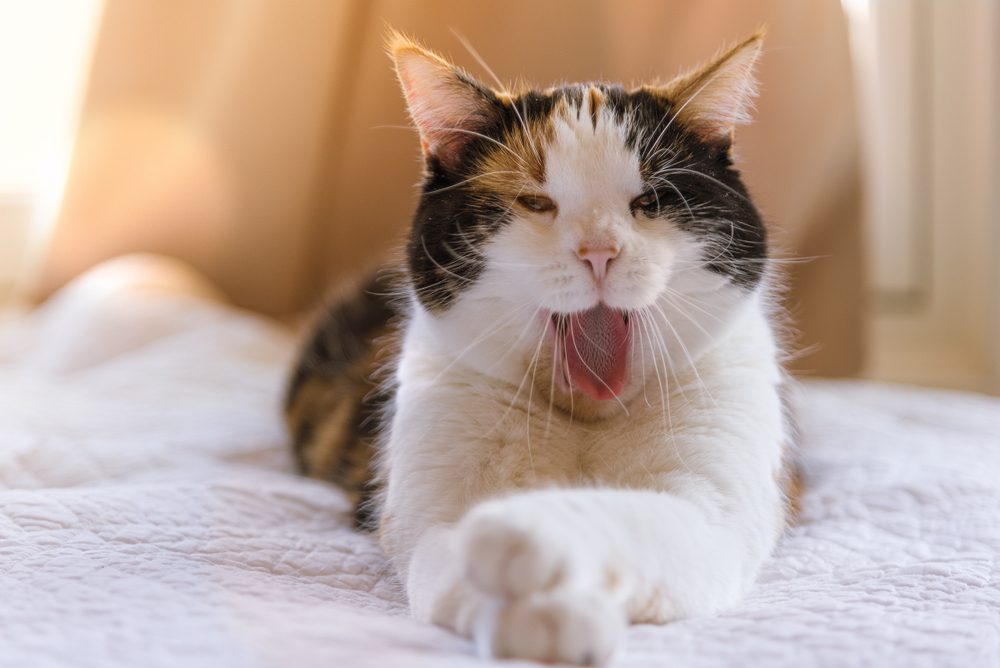
Calicos have some of the most striking coats, but did you know they’re actually not a breed of cat? “Calico” is a reference to their tricolor coat, which consists of black, white, and orange. In calico cats, this pattern manifests itself in distinct patches. The most common cats are domestic shorthairs, and it’s not uncommon to find one black kitten, one tuxedo kitten, and one calico kitten in the same litter. Due to their shared parentage, it’s likely these kittens will have similar personality traits regardless of the color of their coat. In Japanese culture, the maneki neko, a common good luck charm, is usually depicted as a Japanese bobtail cat with calico markings. But they aren’t only popular in Japan. In 2001, the State of Maryland officially named the calico cat as the state cat.
Tortoiseshell cats
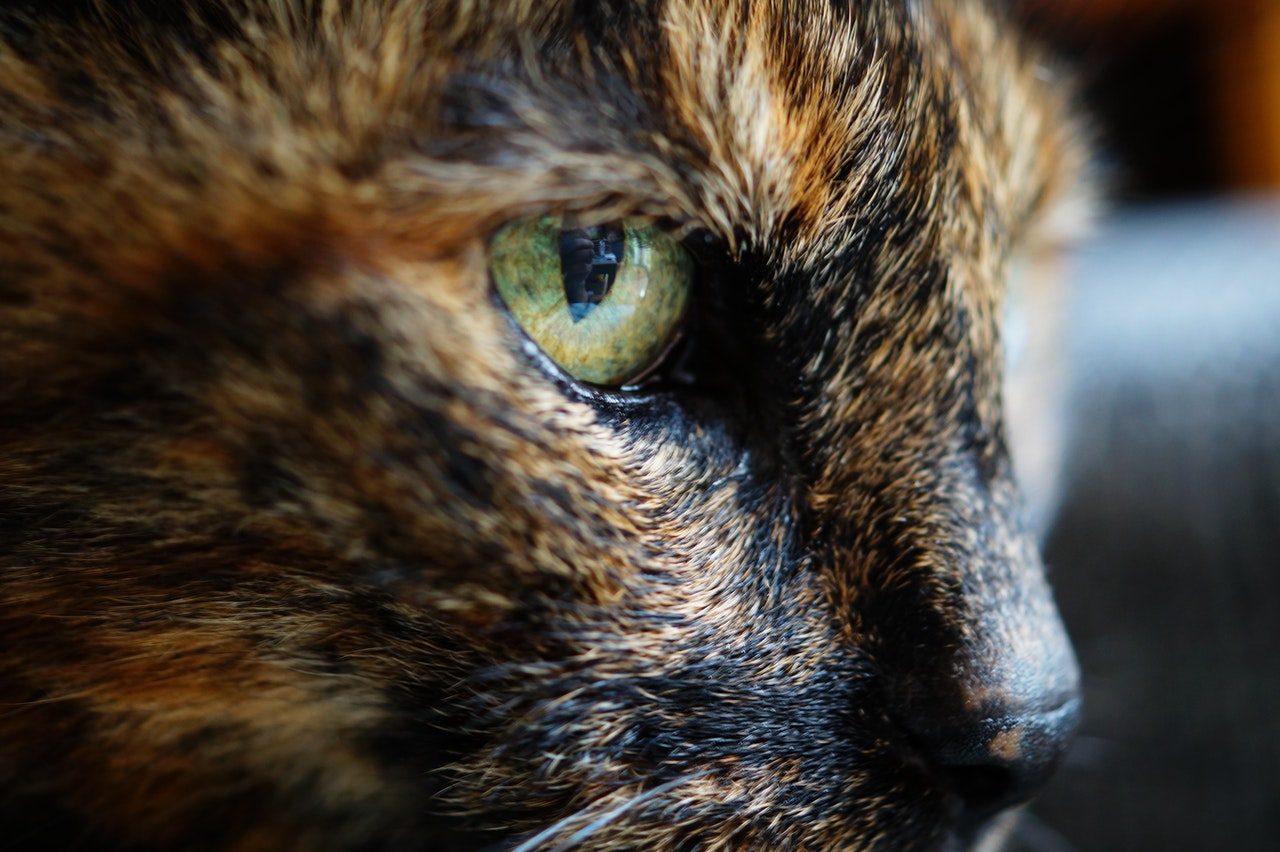
Like the calico cat, tortoiseshell cats — affectionately known as torties — aren’t a distinct breed. The ancient Celts believed torties brought good luck, while Japanese folklore suggests these cats can protect you from supernatural harm. Unlike calicos, which have patches of white fur, a tortoiseshell cat’s coat can have a variety of colors, including red, brown, cream, black, and orange. Dilute torties come in shades of gray, brown, ginger, amber, red, and cinnamon. However, you will never find white markings on a tortoiseshell cat. Normally, torties have mosaic coats, in which their colors are swirled together in a random pattern. An unusual color combination is a chimera, which has two different colors on opposite sides of the body. You’ll often see this on their faces, but it can also occur throughout their coats.
What they have in common
Calico and tortoiseshell coat patterns can occur in a variety of breeds, such as domestic shorthair, British shorthair, Cornish Rex, Maine coon, Persian, and Scottish fold. It’s also possible for calicos and torties to have long or short coats. It’s a common misconception that you’ll never find a male calico or tortie. While they’re extremely rare, they do exist. Only one out of every 3,000 calicos or torties is male, so you may never encounter one. The female chromosome — X — is responsible for orange and black coats. Because females have two X chromosomes, whereas males possess XY chromosomes, there’s a much greater chance that females will be born with the calico or tortoiseshell coloration. But what does all this have to do with their personality? The answer may surprise you.
What does coat color have to do with personality?
Can the color of your cat’s coat affect her personality? According to a University of California–Davis study, the answer is … maybe. Research took place over a two-minute internet survey of over 1,200 cat owners, the questions written to “mask the fact that coat color was the primary exposure of interest to avoid bias on the part of the responder.” The UC–Davis team’s findings were based on anecdotal evidence collected from veterinarians, shelter employees, and owners. The research team concluded, “The finding that tortoiseshell/calico/torbie cats were significantly more frequently aggressive toward humans supports the contention that calicos and tortoiseshells can be challenging for some guardians.”
Is a cat’s red coloration responsible for aggression?
Calicos and torties are known for being assertive, talkative, and occasionally aggressive. Tortie fans have even developed a name for this trademark attitude: tortitude. But is the presence of red in your cat’s fur truly responsible for her personality? In evolutionary biology, there is a phenomenon called a spandrel, which is a physical by-product of another evolutionary trait. Is it possible that the genetic mutation responsible for red fur is the root cause of increased aggression rather than the presence of the color?
If you found the answer to your question somewhat frustrating, we feel the same way. In the end, all cats have their own unique personalities, and you shouldn’t fear that your tortie will bite or scratch you based on one study with a small test group. Train your cat using positive reinforcement, and you’ll be able to live in harmony with a black cat, a tuxedo cat, a calico, or a tortie.